



Part 3: Unleashing livelihoods from culture
In Điện Biên, values forged and passed down through generations are being integrated into products and services, generating additional jobs and income for the people. When culture becomes an integral part of economic activity, heritage values gain expanded avenues to flourish right within community life.
Infusing identity into products
For Lù Thị Toản in Quan Chiêng village, Mường Lay ward, developing tourism began with tapping into the cultural values inherent in her family’s everyday life. Establishing the Mường Lay Homestay, she preserved traditional architectural space and living arrangements, prepared local dishes, and introduced travelers to the customs and lifestyle of the Thái people..jpg)
The homestay space remains close to genuine family routines. Familiar household items, residential layouts, traditional recipes, and narratives surrounding customs and habits are woven into guest services. Through these offerings, travelers enjoy opportunities to experience Thái culture directly within the living domain of local inhabitants.
Lù Thị Toản shared that recognizing how Thái cultural values could establish a distinct tourism product motivated her to retain the intrinsic features of her home and household life to showcase to visitors. She incorporated traditional gastronomy, shared native customs and lore of the Mường Lay region, and engaged guests in real-world interactions. As visitors experience the local culture firsthand, they develop a deeper appreciation, while her household earns additional income from tourism operations.
In Huổi Lèng village, Mường Tùng commune, Lò Sử Hóa chose the traditional embroidered shoemaking craft of the Xạ Phang people as the signature highlight for Sần Sú Tề Homestay. With more than 20 years dedicated to the craft, Lò Sử Hóa has mastered shoemaking techniques, color coordination, sculpting shapes, and rendering decorative motifs endowed with profound cultural symbolism for the Xạ Phang community.
At one stage, the craft of embroidered shoemaking faced stagnation due to outlet bottlenecks. Many village residents lost interest, as the process was labor-intensive while finished products proved hard to sell. Lò Sử Hóa realized that safeguarding the craft required market conduits and an appropriate presentation method to convey product value to external communities. That insight prompted her to integrate shoemaking into her family’s tourism offerings.
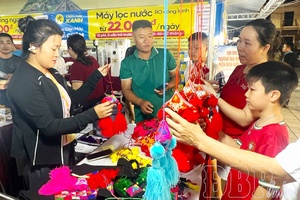
Following the decision to build a homestay right at her residence, Lò Sử Hóa dedicated an area to display embroidered shoes produced by herself and local artisans. Each item is presented alongside narratives of the craft, decorative motifs, and cultural meanings handed down through the community. When hosting guests, she demonstrates shoemaking stages directly, allowing visitors to observe how the Xạ Phang fashion traditional handicrafts.
.jpg)
Situating the experience within domestic living spaces embeds craftwork as a tangible component of the tourism product. Travelers can observe the craftsperson at work, explore the significance of each motif, converse with the artisan, and purchase finished items on the spot. Consequently, the value of the shoe encompasses not only manual labor, but the cultural narratives and artisanal expertise preserved behind each piece.
Lò Sử Hóa remarked that since engaging in tourism, visitor flow has stabilized, attracting both domestic and international travelers. Many purchase items on-site after admiring their beauty. Thanks to tourism, traditional handicrafts have secured fresh market outlets, providing the embroidery craft with renewed momentum to endure.
Home to 19 coexisting ethnic groups, Điện Biên possesses diverse cultural nuances safeguarded across each village and family. When these values are integrated into tourism offerings through appropriate methods, visitors gain authentic experiences while local residents acquire practical conduits to protect culture directly through their daily livelihoods.
Unlocking livelihood directions from culture
At the 2026 Folk Dance Festival held in Điện Biên province, the ethnic culinary pavilion of Văn Phong Restaurant, located in Noong Chứn village, Mường Thanh ward, attracted vast numbers of visitors and local residents. Traditional Thái specialties - such as upland sticky rice, kitchen-hung smoked pork, bamboo shoot salad, and grilled chicken - were presented and served within a shared space of cultural exchange. Familiar dishes of everyday life were channeled into catering to visitors, generating revenue for the business establishment.
That was also the trajectory pursued by Lò Thị Tiển Oanh in developing the Văn Phong Ethnic Culinary Restaurant. Unleashing ethnic cultural values, she selected authentic Thái recipes paired with xòe dance performances, bamboo pole dances, and artistic exchanges. Guests dining at the restaurant can savor ethnic flavors while participating in cultural activities, allowing her family to secure supplemental revenue from tourism services.
.jpg)
Lò Thị Tiển Oanh expressed that she envisions the restaurant not only as a venue introducing Thái cuisine and culture, but as an enterprise creating local employment. Currently, operations provide jobs and income for dozens of workers across food preparation, customer service, and performance arts. As customer volume grows, residents secure more employment and earnings, offering culinary specialties, xòe dances, and Thái cultural spaces expanded opportunities to endure. She hopes this becomes an enduring pathway that conserves heritage while sustaining livelihoods.
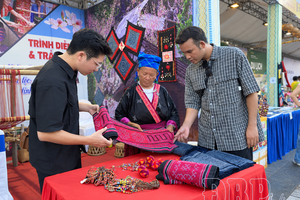
In Pa Xa village, Thanh Yên commune, brocade weaving has evolved into a sustainable livelihood linked to the cultural life of the Lào ethnic community. The village currently counts 33 households engaging 36 laborers in the trade. Village women sustain the intricate stages of thread spinning, loom setting, and weaving, yielding products graced with their ethnic group’s distinctive motifs.
Lò Thị Vân is among the artisans devoted to weaving in Pa Xa village. The work takes place within the village, with finished textiles serving daily utility and supplying products tailored for tourists.
According to Lò Thị Vân, Pa Xa brocade products are reaching closer to travelers, generating supplemental income for participating households. More critically, the craft offers practical utility alongside guaranteed market outlets, furnishing residents with compelling reasons to sustain the heritage. Weaving techniques, color palettes, patterns, and collective experience are passed down through the active production process.
Grassroots-level realities across Điện Biên confirm that when cultural values are woven into tourism products, services, and handicrafts, residents can generate employment and earnings directly within their communities. Initial achievements are opening fresh pathways to tap cultural wealth. This also provides the groundwork for Điện Biên to widen spaces for cultural promotion, allowing communities to engage more deeply and ensuring values handed down across generations flourish sustainably.
Minh Thảo
.jpg)
.jpg)
.jpg)
.jpg)
.jpg)
.jpg)
.jpg)

.jpg)
.jpg)
.jpg)
You have 500/500 characters left
Please enter 5 or more characters!!!